
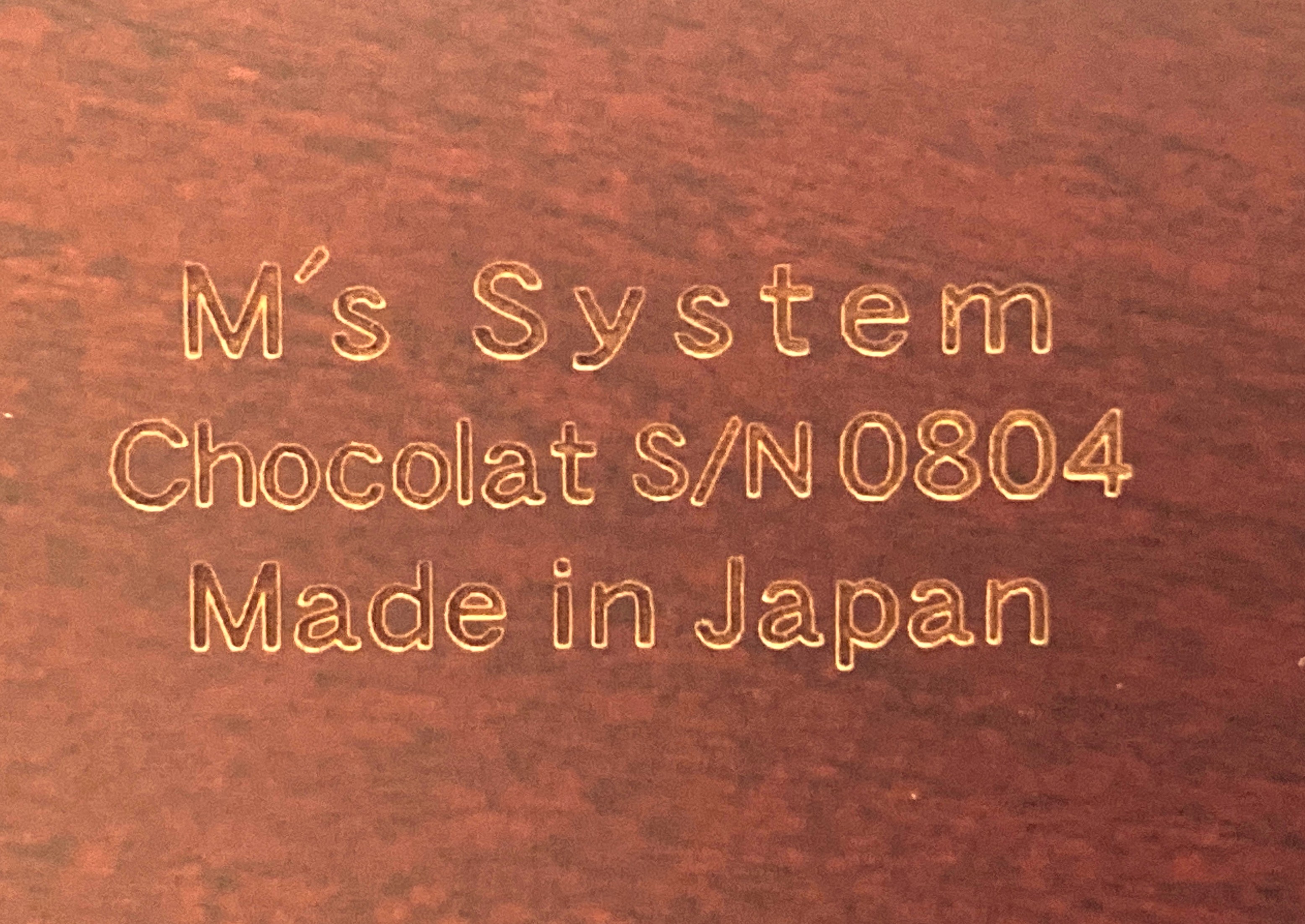
Recently, I searched for "Japanese-made speakers" on the internet out of curiosity.
Several well-known major Japanese brand names appeared in the results.
However, the reality is that only a handful of brands are actually manufactured in Japan anymore.
Today, I would like to discuss the current state of Japan's diminishing "monozukuri" (manufacturing craftsmanship) and why we continue to insist on "Made in Japan."
Japanese brands are not "Made in Japan"? What has changed in the past 30 years.
Like many products around us, speakers are now mostly manufactured overseas.
China, Indonesia, Thailand, Vietnam... excellent factories with advanced technology exist throughout Asia, and products manufactured there are sold under "Japanese brands."
Over the past 30 years, Japan's manufacturing industry has undergone significant transformation. "Rationality," "profitability," "efficiency."
The wave of global economy pursuing these goals has shifted manufacturing from Japan to Asian countries where costs can be better controlled.
This may have been a natural flow as a corporate strategy.
However, on the other hand, Japanese manufacturing, which we had proudly proclaimed to the world as "monozukuri Japan" and took pride in ourselves, increasingly came to be viewed as an "inefficient industry with high labor and overhead costs."
As a result, domestic factories decreased, opportunities for skilled craftsmen to pass on their techniques were lost, and the industry appears to have been on a path of decline.
Is the trust and sense of security that "Made in Japan" once carried sadly becoming a thing of the past?
Why M's System insists on "Made in Japan."
Precisely because of these times, M's System deliberately insists on "Made in Japan."
What we aim for is not merely a "tool" that produces sound.
It is "an existence that moves the heart like a musical instrument" and also a "Sound Air Conditioner" that tunes the heart and body.
M's System's wave-motion speakers are carefully crafted one by one by the hands of skilled Japanese craftsmen.
From wood selection and processing to assembly and beautiful painting, everything is done through delicate handwork.
This is the crystallization of "monozukuri" that takes time and effort, something that mass production can never replicate.
"How can we best bring out the resonance of this wood?" "How can this finish blend most beautifully into the space?" Because our products are imbued with such craftsmen's "soul," our speakers produce warm, rich sounds as if they were alive.
Thorough quality control and commitment to "aging." Quality control in the manufacturing process also demonstrates the thoroughness characteristic of Japanese monozukuri.
Completed products undergo strict double "inspection" and "sound testing" before finally being shipped.
Furthermore, M's System places great importance on the "aging" process.
Just as wine and whiskey develop depth through maturation, speakers also reveal their true potential by continuously producing sound for a certain period.
Through this aging period, products become more stable and ready to produce expansive, natural sound.
This might be a process that could be omitted if only efficiency were pursued.
However, it is precious time that we can never compromise on in order to provide our customers with the ultimate sound experience.
The appeal of M's System products lies not only in this careful "monozukuri."
Our uniquely developed "wave technology" creates unparalleled, one-of-a-kind value.
While conventional speakers deliver sound from a "point" in a "line," wave-motion speakers naturally spread sound across a "surface"
and throughout the "entire space." Like a gentle breeze softly enveloping an entire room,
sound reaches your ears and body naturally and without stress, seemingly from everywhere and nowhere.
The "natural sound" space realized by this technology has earned such high praise from customers that they call it a "Sound Air Conditioner."
By bathing in pleasant sound showers, your mind and body relax, your breathing deepens, and you can experience the same tranquility as being in a forest.
Carrying the pride of "Made in Japan" through sound. Japanese "monozukuri" is not merely inefficient.
It embodies craftsmen's high technical skills and the "omotenashi spirit" that pays attention to every detail.
M's System, carrying the pride of this disappearing "Made in Japan" in our hearts, will continue to create each speaker with sincere dedication.
Precisely because we live in an era of mass production, we want more people to know the value of warmth born from handwork and "natural sound" brought by our unique wave technology.
For those seeking "Japanese-made speakers" and those truly searching for sound that heals from the heart, we want you to experience M's System's wave-motion speakers.
Please visit our showroom and experience the "art of sound" woven by Japanese craftsmanship and wave technology.
We promise you a special time that will delight your heart and body.
Listening Room Information▼


More from our Blog
You may also be interested in
Latest in "CEO Blog"

細胞はどこで音を受け取っているのか?
細胞はどこで音を受け取っているのか――細胞膜・接着部位・細胞骨格という“入り口”について前回は、細胞がただ音に反応しているだけでなく、周波数や音圧、波のかたちと…

細胞は音の何を感じているのか?
細胞は音の何を感じているのか――「音楽」ではなく、「振動の質」という視点前回は、細胞そのものが可聴域の音に反応し、遺伝子の働きに変化が生じる可能性を示した研究を…

細胞は音に反応するのか?
細胞は音に反応するのか――音を「耳で聴くもの」から、もう一度考え直してみる私たちはふつう、音を耳で聴くものだと考えています。音楽を楽しむ。声を聞き取る。物音に気…
Latest Articles
細胞はどこで音を受け取っているのか?
細胞はどこで音を受け取っているのか――細胞膜・接着部位・細胞骨格という“入り口”について前回は、細胞がただ音に反応しているだけでなく、周波数や音圧、波のかたちと…
細胞は音の何を感じているのか?
細胞は音の何を感じているのか――「音楽」ではなく、「振動の質」という視点前回は、細胞そのものが可聴域の音に反応し、遺伝子の働きに変化が生じる可能性を示した研究を…
細胞は音に反応するのか?
細胞は音に反応するのか――音を「耳で聴くもの」から、もう一度考え直してみる私たちはふつう、音を耳で聴くものだと考えています。音楽を楽しむ。声を聞き取る。物音に気…
Catalog Request
Product catalogs, customer voices, media features & more. Request materials here.
Newsletter
New products, events & more. Stay up to date with our latest news. Subscribe here.
Book a Session
Reserve your listening session.
Contact Us
Products, maintenance, events & more. Get in touch with us. We'd love to hear from you.