
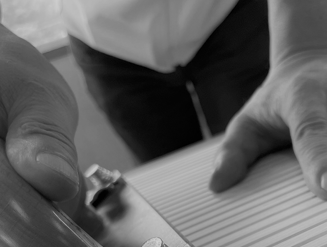
Of course, everything is handmade.
Our culture has been shaped by the "hands" that create things, to the extent that hands are called "the brain extending beyond the body."
Just as the Latin term "HOMO FABER" means "man the maker," creating is a universal human endeavor, but the Japanese people are particularly those who have found deep meaning in their "hands."
Similarly, language forms the foundation for creating culture.
It is said that Japanese has over 1,000 words containing the character for "hand" (手).
Please try to think of words with "hand" in them.
How about it? There are quite a lot, aren't there?
Before that, it's often said that Japanese also has many words containing "ki" (気) as a characteristic feature.
Words like genki (energy), kuuki (air), kimochi (feelings), denki (electricity), tenki (weather) are used across a wide range of meanings including physical and mental states, natural phenomena, energy, and emotions. It also becomes a verb as in "kizuku" (to notice), and words like "kehai" (presence), "fun'iki" (atmosphere), "yuuki" (courage) come to mind endlessly.
So how about words with "hand"?
Most significantly, we express people themselves using "hand."
"Utaite" (singer), "kashu" (singer), "kikite" (listener), "aite" (partner), "wakate" (young person), etc.
We represent people themselves with "hand."
There are also "teshita" (subordinate) and "te wo kasu" (to lend a hand), as well as "tema" (labor) and "teate" (allowance) that represent work, and "ii te" (good move), "tebayaku" (quickly), "oteage" (giving up) - truly, we can list them endlessly.
Please try listing words with "hand" for a moment.
Even if someone says "sono te ni noru ka" (fall for that trick), it's not so difficult as to "tekoozuru" (struggle with) nor "te ni oenai" (unmanageable).
Rather than calling such things "nigate" (weak at), if we somehow "tegarari wo taguriyosete" (draw in clues) and "te wo tsukuseba" (do our utmost), we should surely find them.
"Mazu tehajime ni" (first of all, to begin with).
In this way, we can find endless words containing "hand" in Japanese.
What we want to convey to you is that these speakers are genuinely "handmade."
Each one is crafted with care and dedication, just as an artisan creates a musical instrument.
This is something that can never be replicated in the efficiency-first factories of large corporations.
We at M's System do not consider mass-producing the same type of products "easily," "affordably," and "extensively" to pursue sales.
We at M's System will continue to deliver handcrafted "Sound Air Conditioners" that "steadily" and "exhaustively" create comfortable spaces and relaxing environments that tune the human heart and body.


More from our Blog
You may also be interested in
Latest in "CEO Blog"

細胞はどこで音を受け取っているのか?
細胞はどこで音を受け取っているのか――細胞膜・接着部位・細胞骨格という“入り口”について前回は、細胞がただ音に反応しているだけでなく、周波数や音圧、波のかたちと…
細胞は音の何を感じているのか?
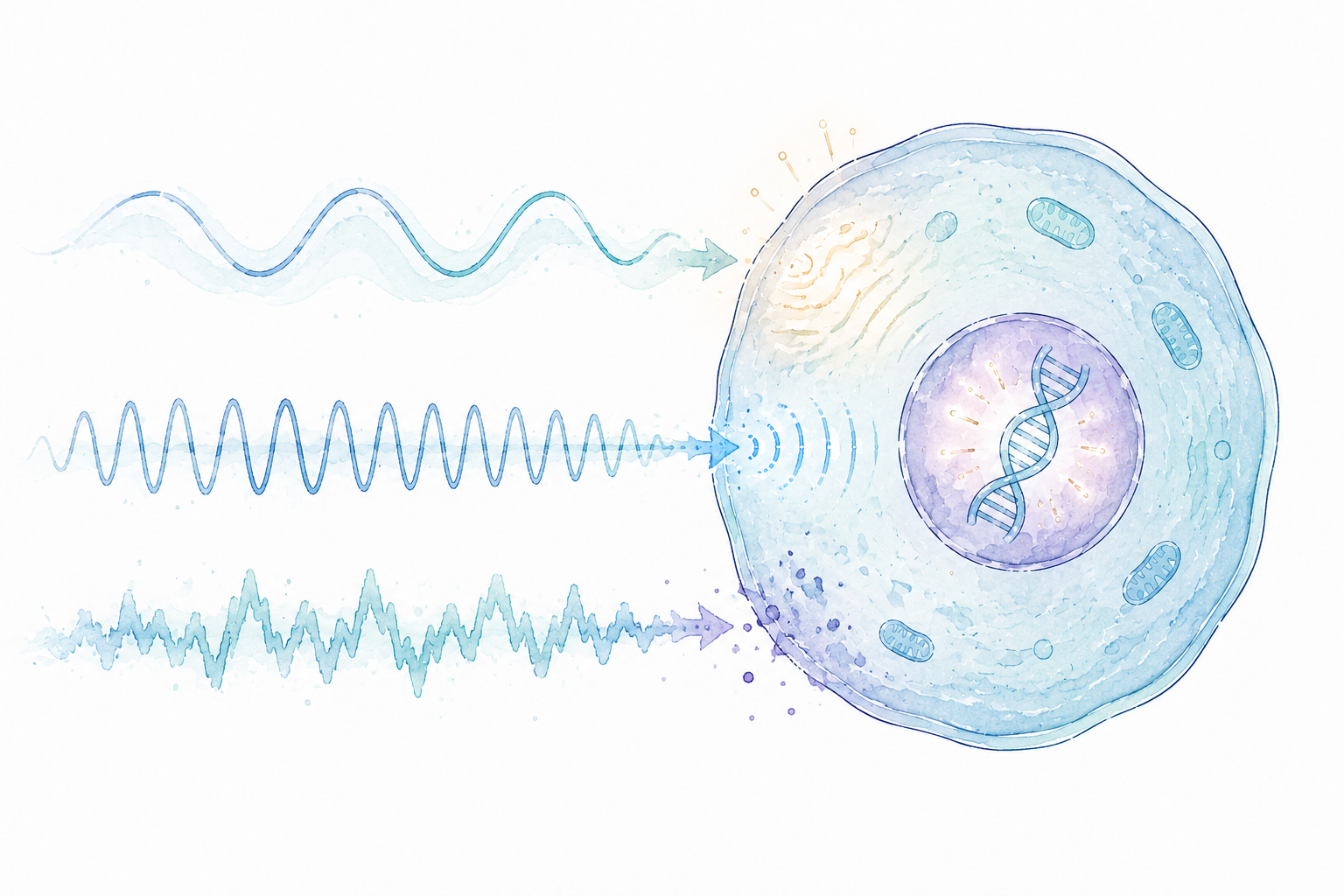
細胞は音の何を感じているのか――「音楽」ではなく、「振動の質」という視点前回は、細胞そのものが可聴域の音に反応し、遺伝子の働きに変化が生じる可能性を示した研究を…

細胞は音に反応するのか?
細胞は音に反応するのか――音を「耳で聴くもの」から、もう一度考え直してみる私たちはふつう、音を耳で聴くものだと考えています。音楽を楽しむ。声を聞き取る。物音に気…
Latest Articles
細胞はどこで音を受け取っているのか?
細胞はどこで音を受け取っているのか――細胞膜・接着部位・細胞骨格という“入り口”について前回は、細胞がただ音に反応しているだけでなく、周波数や音圧、波のかたちと…
細胞は音の何を感じているのか?
細胞は音の何を感じているのか――「音楽」ではなく、「振動の質」という視点前回は、細胞そのものが可聴域の音に反応し、遺伝子の働きに変化が生じる可能性を示した研究を…
細胞は音に反応するのか?
細胞は音に反応するのか――音を「耳で聴くもの」から、もう一度考え直してみる私たちはふつう、音を耳で聴くものだと考えています。音楽を楽しむ。声を聞き取る。物音に気…
Catalog Request
Product catalogs, customer voices, media features & more. Request materials here.
Newsletter
New products, events & more. Stay up to date with our latest news. Subscribe here.
Book a Session
Reserve your listening session.
Contact Us
Products, maintenance, events & more. Get in touch with us. We'd love to hear from you.