
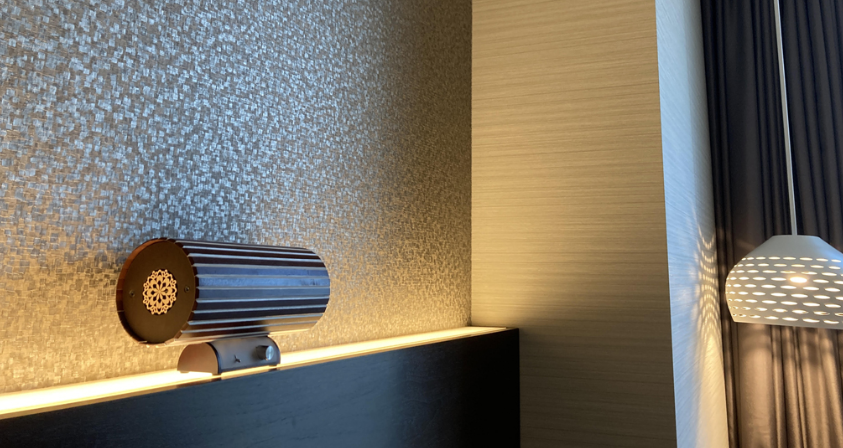
If complete silence could be maintained,one might think we could sleep peacefully, but actually, that's not how humans work.
Humans are called "auditory animals."
When making life-or-death decisions, we entrust our final judgmentto our auditory sensors.
That's why hearing is also called the sensor that never sleeps.
While we sleep, sight, smell, touch, and taste are mostlyat rest, but only hearing continues to work.
Complete silence can be achieved in a special room called an "anechoic chamber,"but a space where all sounds are absorbed and nothing echoes isa terrifying space for humans. This is because we lose the auditoryinformation that helps us determine life and death.
On the other hand, a room filled with noise doesn't necessarilyprovide comfort either.
It has only been a few decades since webegan living and sleeping surrounded by various radio waves,electromagnetic waves, and electricity within artificial structureslike concrete.
Humans as a species lived surrounded by natural sounds forat least hundreds of thousands of years.
Our exposure tomechanical sounds, direct sounds, artificial sounds, and digital soundsis a very recent phenomenon.
We can sleep peacefully when surrounded by natural sounds. We,as biological beings, know this instinctively.
That's why this wave-motion speaker is called a "sleep-dedicated speaker."
If the moment we fall asleep is in a safe and secure environment,we can become as defenseless as if we had peacefully passed away.
Noise refers not only to unwanted sounds, but can be said to bea general term for various unnecessary disturbances to us.
This includesnot only audible sounds, but also radio waves, electromagnetic waves,electricity, and various other things that haven't even been named yet.
To sleep peacefully in such an environment, let's createa small forest within the city.
Only by being surrounded by natural soundscan we, as biological beings, finally sleep peacefully.
Sound Sleep Speaker
/lp/soundsleep/


More from our Blog
You may also be interested in
Latest in "CEO Blog"

細胞はどこで音を受け取っているのか?
細胞はどこで音を受け取っているのか――細胞膜・接着部位・細胞骨格という“入り口”について前回は、細胞がただ音に反応しているだけでなく、周波数や音圧、波のかたちと…
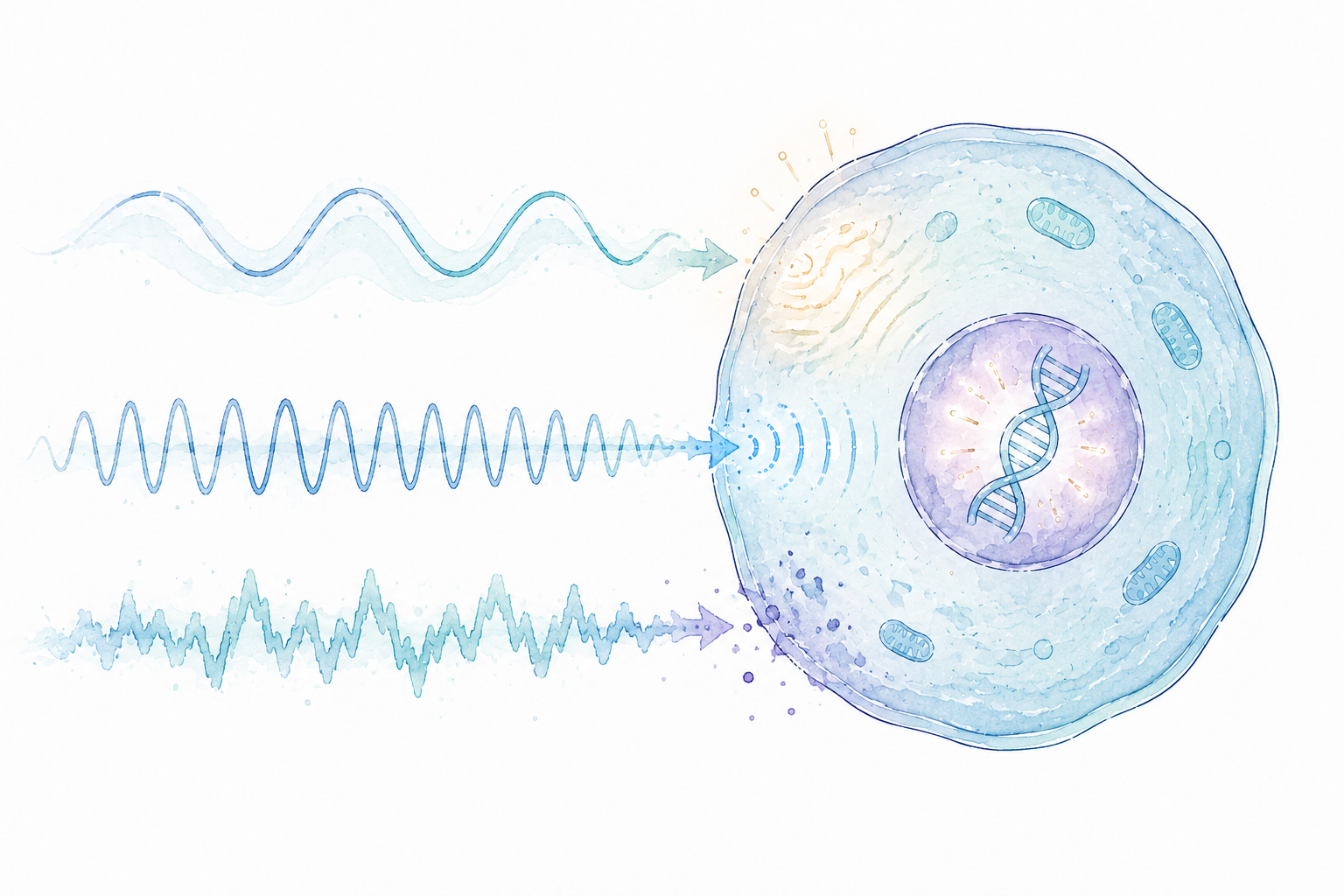
細胞は音の何を感じているのか?
細胞は音の何を感じているのか――「音楽」ではなく、「振動の質」という視点前回は、細胞そのものが可聴域の音に反応し、遺伝子の働きに変化が生じる可能性を示した研究を…

細胞は音に反応するのか?
細胞は音に反応するのか――音を「耳で聴くもの」から、もう一度考え直してみる私たちはふつう、音を耳で聴くものだと考えています。音楽を楽しむ。声を聞き取る。物音に気…
Latest Articles
細胞はどこで音を受け取っているのか?
細胞はどこで音を受け取っているのか――細胞膜・接着部位・細胞骨格という“入り口”について前回は、細胞がただ音に反応しているだけでなく、周波数や音圧、波のかたちと…
細胞は音の何を感じているのか?
細胞は音の何を感じているのか――「音楽」ではなく、「振動の質」という視点前回は、細胞そのものが可聴域の音に反応し、遺伝子の働きに変化が生じる可能性を示した研究を…
細胞は音に反応するのか?
細胞は音に反応するのか――音を「耳で聴くもの」から、もう一度考え直してみる私たちはふつう、音を耳で聴くものだと考えています。音楽を楽しむ。声を聞き取る。物音に気…
Catalog Request
Product catalogs, customer voices, media features & more. Request materials here.
Newsletter
New products, events & more. Stay up to date with our latest news. Subscribe here.
Book a Session
Reserve your listening session.
Contact Us
Products, maintenance, events & more. Get in touch with us. We'd love to hear from you.