
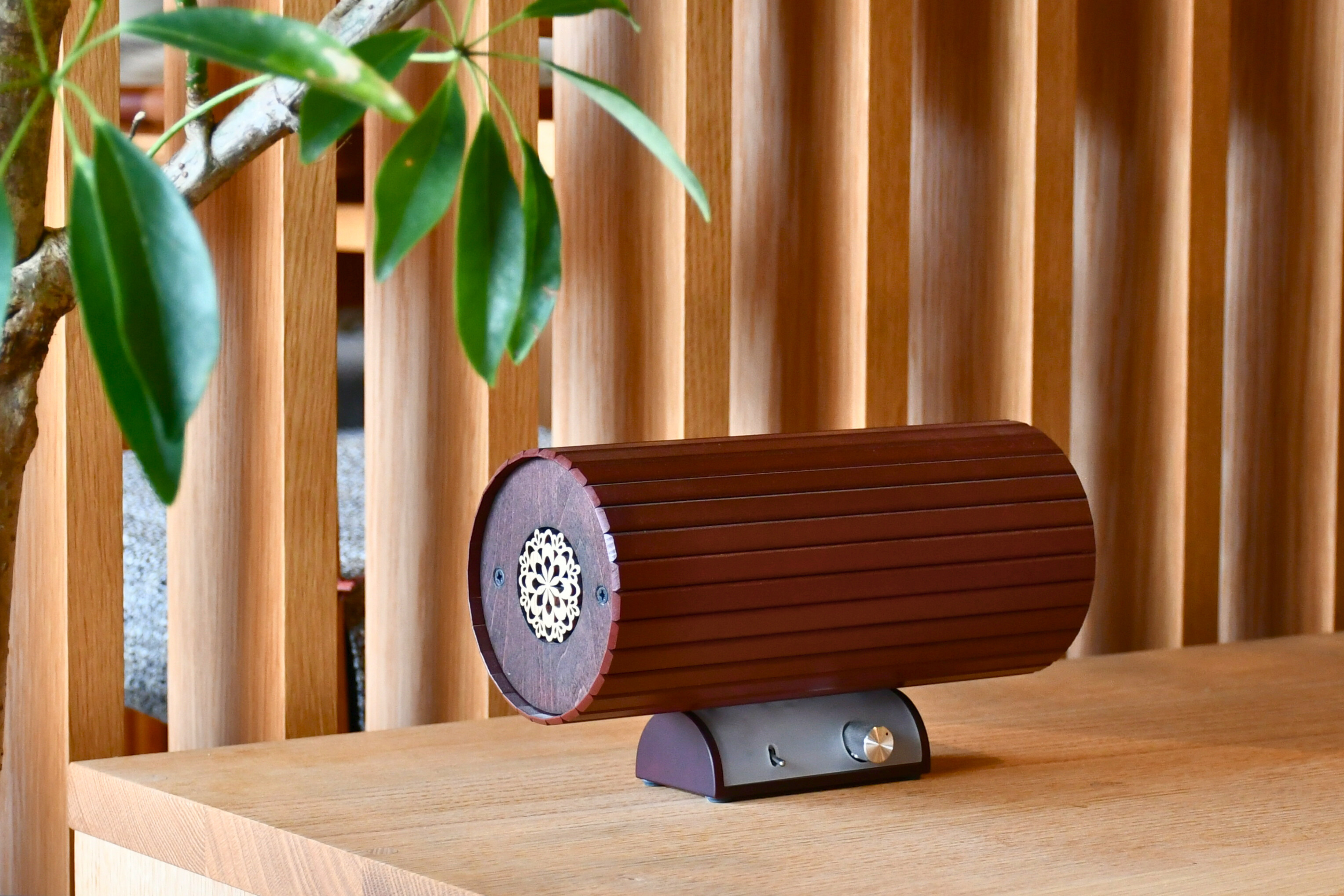
March 3rd was Girls' Day (Hinamatsuri), but it is also designated as Ear Day. Japanese people love this kind of wordplay, so March 3rd (mi-gatsu mi-ka) became Ear Day (mimi no hi), though it also seems that the number 3 resembles the shape of an ear. More fittingly, or rather more appropriately for Ear Day, it is also Alexander Graham Bell's birthday. True to his name, Bell, famous as the inventor of the telephone, was also a researcher who dedicated his life to helping people with hearing impairments. It was Graham Bell who introduced Miss Sullivan to Helen Keller.
The Japan Society of Otorhinolaryngology's designation of March 3rd as Ear Day was truly meaningful, even if it simply encourages people to give some thought to matters related to hearing.
On the other hand, while I'm not sure of the reasoning or basis for March 14th being designated as World Sleep Day, for Japanese people who are said to be among the most sleep-deprived in the world, like Ear Day, if it provides an opportunity to take some time to think about true sleep, its fundamental issues and challenges, and solutions, that would be very beneficial. It's clear to everyone that human health depends on exercise, diet, and sleep. However, while exercise and diet are at least conscious behaviors that we can restrain, suppress, and control, sleep is unconscious, making it crucial to prepare approaches to falling asleep and the sleep environment in advance.
Environment refers to the external world that surrounds humans or living beings, interrelates with them, and directly or indirectly influences them, making it the greatest factor directly affecting sleep quality and depth. Of course, this involves each person's senses, encompassing everything around people—light, scent, texture—but the most important element may be the space itself. Space, air. The vibration of air is called "sound," so sound quality determines air quality. Sound quality determines space quality, which directly connects to sleep quality. In honor of Sleep Day, why not take some time to consider these matters? It might significantly improve the quality of sleep that has been lacking, unsatisfying, or anxiety-inducing.
The only research institution studying "sound and sleep": Sound and Sleep Research Institute


More from our Blog
You may also be interested in
Latest in "CEO Blog"

細胞はどこで音を受け取っているのか?
細胞はどこで音を受け取っているのか――細胞膜・接着部位・細胞骨格という“入り口”について前回は、細胞がただ音に反応しているだけでなく、周波数や音圧、波のかたちと…
細胞は音の何を感じているのか?
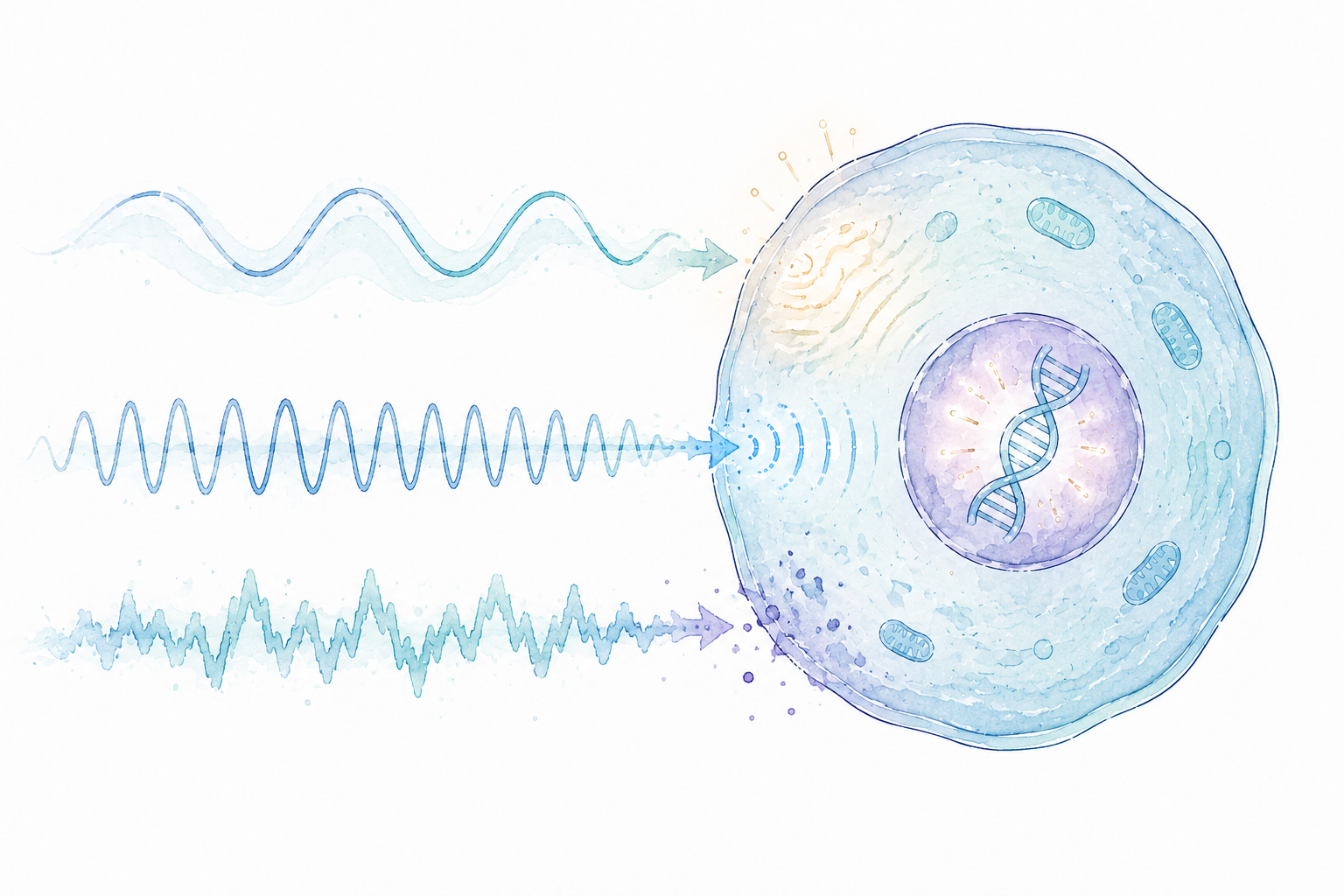
細胞は音の何を感じているのか――「音楽」ではなく、「振動の質」という視点前回は、細胞そのものが可聴域の音に反応し、遺伝子の働きに変化が生じる可能性を示した研究を…

細胞は音に反応するのか?
細胞は音に反応するのか――音を「耳で聴くもの」から、もう一度考え直してみる私たちはふつう、音を耳で聴くものだと考えています。音楽を楽しむ。声を聞き取る。物音に気…
Latest Articles
細胞はどこで音を受け取っているのか?
細胞はどこで音を受け取っているのか――細胞膜・接着部位・細胞骨格という“入り口”について前回は、細胞がただ音に反応しているだけでなく、周波数や音圧、波のかたちと…
細胞は音の何を感じているのか?
細胞は音の何を感じているのか――「音楽」ではなく、「振動の質」という視点前回は、細胞そのものが可聴域の音に反応し、遺伝子の働きに変化が生じる可能性を示した研究を…
細胞は音に反応するのか?
細胞は音に反応するのか――音を「耳で聴くもの」から、もう一度考え直してみる私たちはふつう、音を耳で聴くものだと考えています。音楽を楽しむ。声を聞き取る。物音に気…
Catalog Request
Product catalogs, customer voices, media features & more. Request materials here.
Newsletter
New products, events & more. Stay up to date with our latest news. Subscribe here.
Book a Session
Reserve your listening session.
Contact Us
Products, maintenance, events & more. Get in touch with us. We'd love to hear from you.